. 

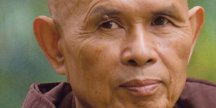
"I breathe in, and I know I am breathing in - that's the practice of mindful breathing."
Thich Nhat Hahn in 'Peace is Every Step'
On Tuesday 5th July I set out why Rupert Murdoch and his son James should be seen as responsible for the phone hacking scandal and should be declared unfit to run a major media corporation in Britain. There was an emergency debate in the Commons the next day and Tom Watson MP made an exceptionally devestating case against Rebekah Brooks, the editor of the News of the World at the time who is now the Chief Executive of News International. He shows, beyond reasonable doubt, that her claims not to have know what was happening are false. He also shows how James Murdoch ran a cover-up. Comments on OurKingdom's open question on the fate of News of the World, show that the evidence set out by Tom Watson is still not widely known, perhaps because the other papers and certainly the BBC are hanging back from reporting something which shows that they too were asleep on the pavement. So here is Tom Watson's speech, slightly edited and without the parliamentary exchanges (see here for the Hansard version). Anthony Barnett.
News International... was systematically, ruthlessly, and without conscience or morality, interfering with the phones of victims of murder, cruelly deceiving their families and impeding the search for justice. Glenn Mulcaire [who hacked the phones] has accepted some share of responsibility for this moral sickness, but the editor in charge of him [Rebekah Brooks] refuses to take responsibility. Indeed, far from accepting blame, she has—amazingly—put herself in charge of the investigation into the wrongdoing; the chief suspect has become the chief investigator.
I believe that Rebekah Brooks was not only responsible for wrongdoing, but knew about it. The evidence in the paper that she edited contradicts her statements that she knew nothing about unlawful behaviour. Take the edition that she edited on 14 April 2002, which reveals that the News of the World had information from Milly Dowler’s phone. In other words, they knew about the messages on her phone. They wrote that there was
“left a message on her voicemail after the 13-year-old vanished at 4pm on March 21. On march 27th, six days after Milly went missing in Walton-on-Thames, Surrey, the employment agency appears to have phoned her mobile".
Click on link to read the full article
Michael Stroud, unsure about how to be both a Buddhist and a Jew, talks with well-known Buddhists who have returned home to Judaism. They’ve found it fulfilling to practice both Buddhism and the religion of their birth.

Norman Fischer, sitting cross-legged on his cushion and wearing a kippa, or skullcap, is talking about the exodus from Egypt, the climactic moment when the Hebrews are cornered by Pharaoh. “They can’t go forward and they can’t go back,” he says. “It’s as if everything funnels down to that one moment and then”—Fischer’s arms suddenly sweep wide to part the Red Sea—“Liberation!” he shouts.
It’s a week before Passover on a bright, San Francisco spring day, and Fischer is helping lead a one-day retreat of sitting meditation and Jewish wisdom teachings at the Makor Or Jewish Meditation Center. Except for the Jewish teachings and the kippas, the retreat is largely indistinguishable from a one-day Zen retreat. This isn’t surprising, since Fischer is the former abbot of the San Francisco Zen Center and runs the Everyday Zen Center in Mill Valley across the bay.
I have joined several dozen Jews from a variety of backgrounds gathered in the small house that is Makor Or. I’m here, mostly, as a final step in vanquishing my lifelong notion that I need to decide whether I am a Buddhist or a Jew. It shouldn’t matter—I sit, I walk, I sing, I pray. I read Fischer’s Zen-inspired translations of the Psalms. There’s no conflict—although it has taken me up until now to realize that.
Fischer was never torn the way I’ve been. “I never felt that I rejected Judaism, or became a Buddhist,” he says. “I was ordained as a Zen priest, but I never saw that as switching. It’s really karma.”
My karma has led me from Hebrew School and a Bar Mitzvah in Redwood City to Ch’an retreats in Taiwan to Vipassana retreats in Marin County to Sabbaths in Southern California and back to Hebrew School—this time for my two children. I’m a tiny piece of an interesting phenomenon. Western Buddhism is chock-full of Jews: Roshi Bernie Tetsugen Glassman, Lama Surya Das, Natalie Goldberg, Jack Kornfield, Joseph Goldstein, Sharon Salzberg, Sylvia Boorstein, Mel Weitsman, Dennis Genpo Merzel Roshi, Philip Kapleau, and on and on. So many Jews have taken to Buddhism that a term has been invented to describe them—“Jubu,” or occasionally, “Buju.” Their stories form a genre, ranging from The Jew in the Lotus, about a dialog between the Dalai Lama and a group of American Jews, to That’s Funny, You Don’t Look Buddhist, Boorstein’s book about her dual identities.
Like me, some of these Jews have integrated Jewish and Buddhist practices into their lives.
To read this fascinating article click on link